Brighton have beaten Manchester City and Arsenal this season, and they are third in the Premier League. The reason is not only their attack. It is a defensive system that few top sides know how to break down.
Revenge, then a 1-0 win
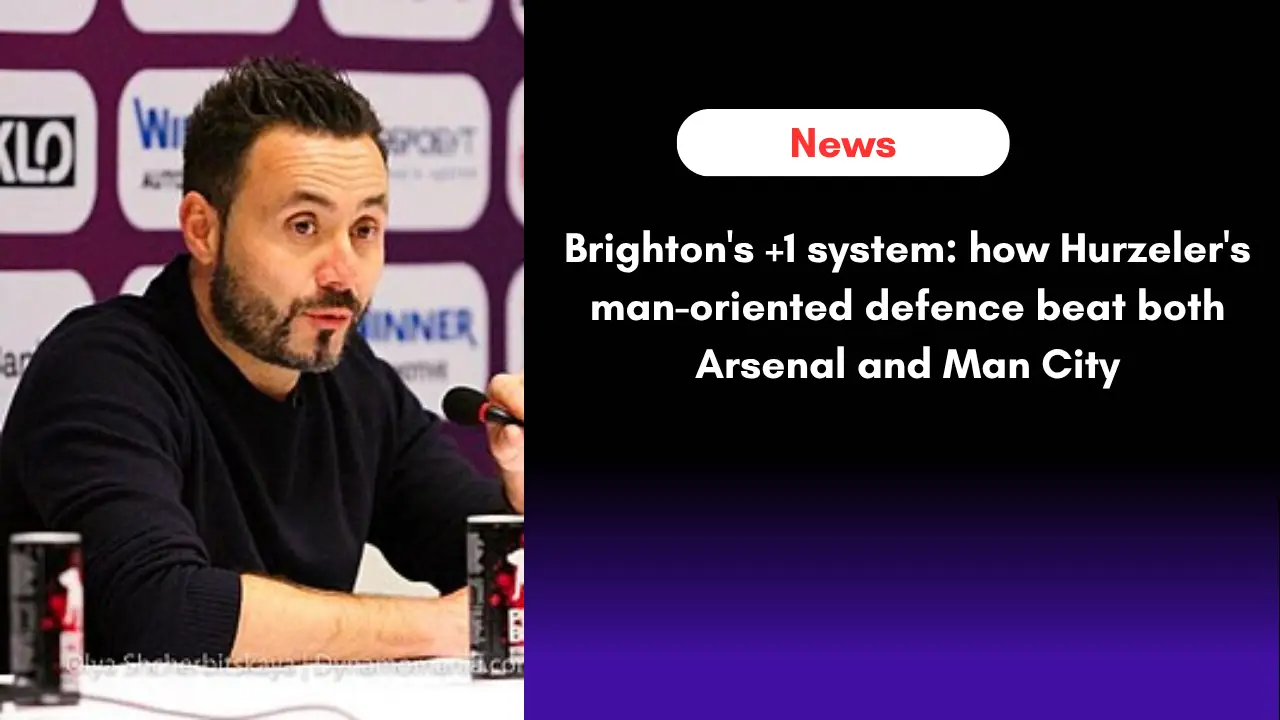
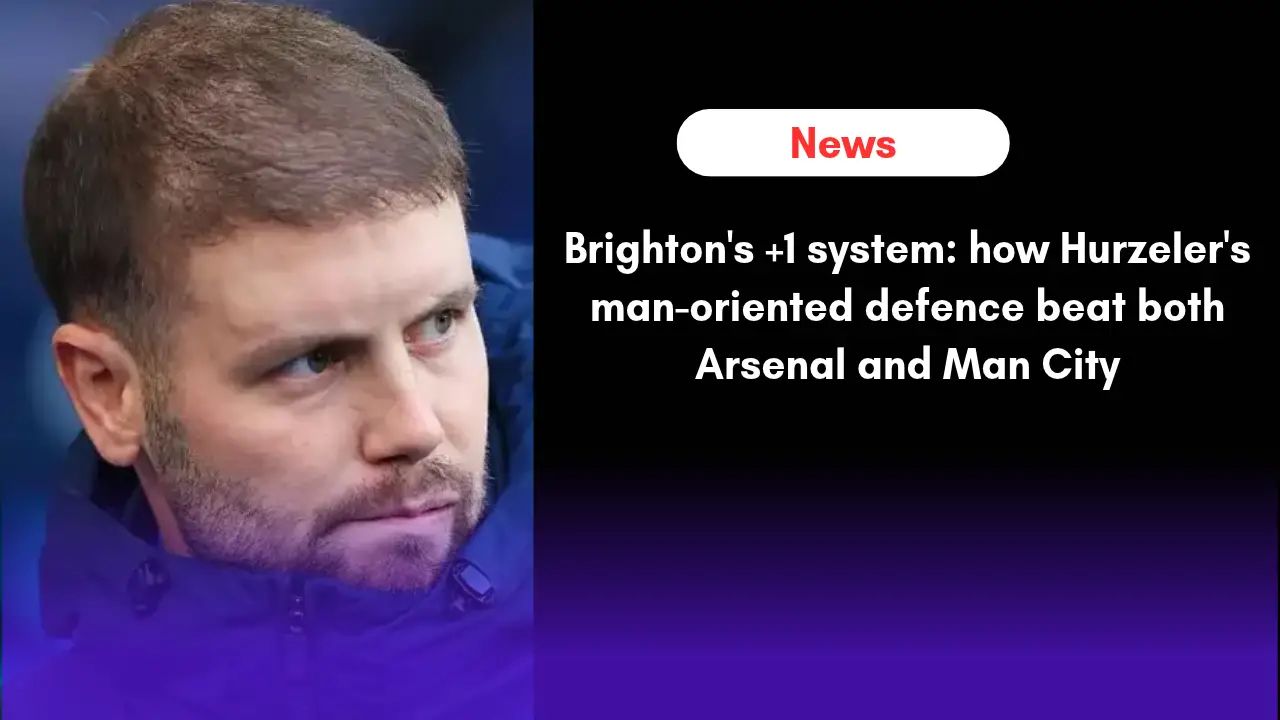
Fabian Hurzeler, 33, promised “a great chance on Saturday to take revenge” after City knocked Brighton out of the Carabao Cup. A week later, he got it.
Brighton won 1-0, and City failed to score at home for the first time in 23 matches. Only City and leaders Arsenal sit above Brighton in the table.
The numbers behind the run
Brighton are the league’s top scorers with 24 goals in nine games. The analysis of their season, however, points to the defence as the foundation. They have conceded seven, and only Arsenal have let in fewer.
High press: man-to-man from goal-kicks
When the opposition take goal-kicks, Brighton press high and match up man-to-man. Many teams do this, but Brighton’s intensity makes it work better than most.
There is a built-in problem. If the keeper joins the build-up, the opponents have an extra player against Brighton’s 10 outfield pressers.
Brighton’s fix is for one attacker to abandon the centre-back he was marking and curve his run towards the keeper. The curve blocks the pass back to the player he has left, while everyone else stays with their direct opponent.
Brighton will also leave someone free on purpose. That player is usually the far-side full-back or winger, the hardest man to reach. The logic is simple: more bodies near the ball help win it back, and the free player is unlikely to receive it.
Where Brighton differ: man-oriented even in a deep block
Most high-pressing teams drop into a zonal shape once pushed back, and a 4-4-2 is the usual choice among top sides. Players guard set zones, with the focus on denying the centre.
Brighton keep man-to-man principles even when defending deep, just in a more controlled form. The key is the “plus-one”: if the opponents push four forwards up, Brighton defend with five.
They are not trying to go man-for-man everywhere. They follow two principles:
- keep a spare player at the back
- keep the centre of the pitch blocked
How it played out against City
Enzo Maresca had right-back Matheus Nunes move inside in possession, almost as a right-sided striker. City, PSG and Arsenal all use full-backs this way, because the player tracking them faces a awkward choice. Wingers are normally reluctant to follow a full-back deep into their own penalty area.
Brighton’s answer was Maxim de Cuyper. Hurzeler has used him as left winger this season, but he has spent most of his career at left-back. That background gave him the work rate and defensive instincts to follow Nunes all the way. De Cuyper dropped in as left centre-back, which turned Brighton’s line into a back five. Once Brighton had the ball, he returned to the left wing.
The spare man, and how Brighton close him down
The plus-one has a cost, because it leaves one opposition player free. That is usually a centre-back, who gets time on the ball. Ideally, it is one who is not comfortable in possession.
Even a strong ball-playing defender struggles, because every pass option is either marked or can be marked within a fraction of a second. Brighton also keep shifting, looking for the moment to send one player at the free centre-back. When that happens, the whole team locks onto a full man-to-man press. The aim is to force a turnover or push the opponent back towards their goalkeeper.
City’s best answer, according to the analysis, was Abdukodir Khusanov’s powerful ball-carrying from a wide position.
Why it matters
Brighton protect the centre, refuse to be dragged out by players who stretch the shape, and still stay tight to nearby opponents. That makes them a hard puzzle to solve, and the analysis concludes that their attacking output rests on this platform.